
It’s Ingenious: Making Building Materials That Can Withstand the Environment
One of Fast Company’s Most Innovative Small Companies of 2026, RSG 3-D’s Building Panels Are Designed To Survive Earthquakes, Fires, and Hurricanes

Editor’s Note: The original version of this article stated that the La Residencia multifamily complex in San Jose del Cabo, Mexico had survived five Category-5 hurricanes without any damage; this has been corrected to reflect that it has withstood “numerous severe storms.”
Anyone operating in the built world knows that every step of the development process—from land acquisition to occupancy—carries some degree of risk. And it’s perhaps even more obvious, especially recently, that one major source of that risk today is good old Mother Nature.
Whether it’s in the form of hurricanes, earthquakes, floods, tornadoes, or wildfires, the climate has a stubborn tendency to force its way into the conversation, whether we like it or not. And with 77% of the United States now falling within “extreme risk” zones for natural disasters, it’s no wonder that resilient building practices have become a major topic of discussion.
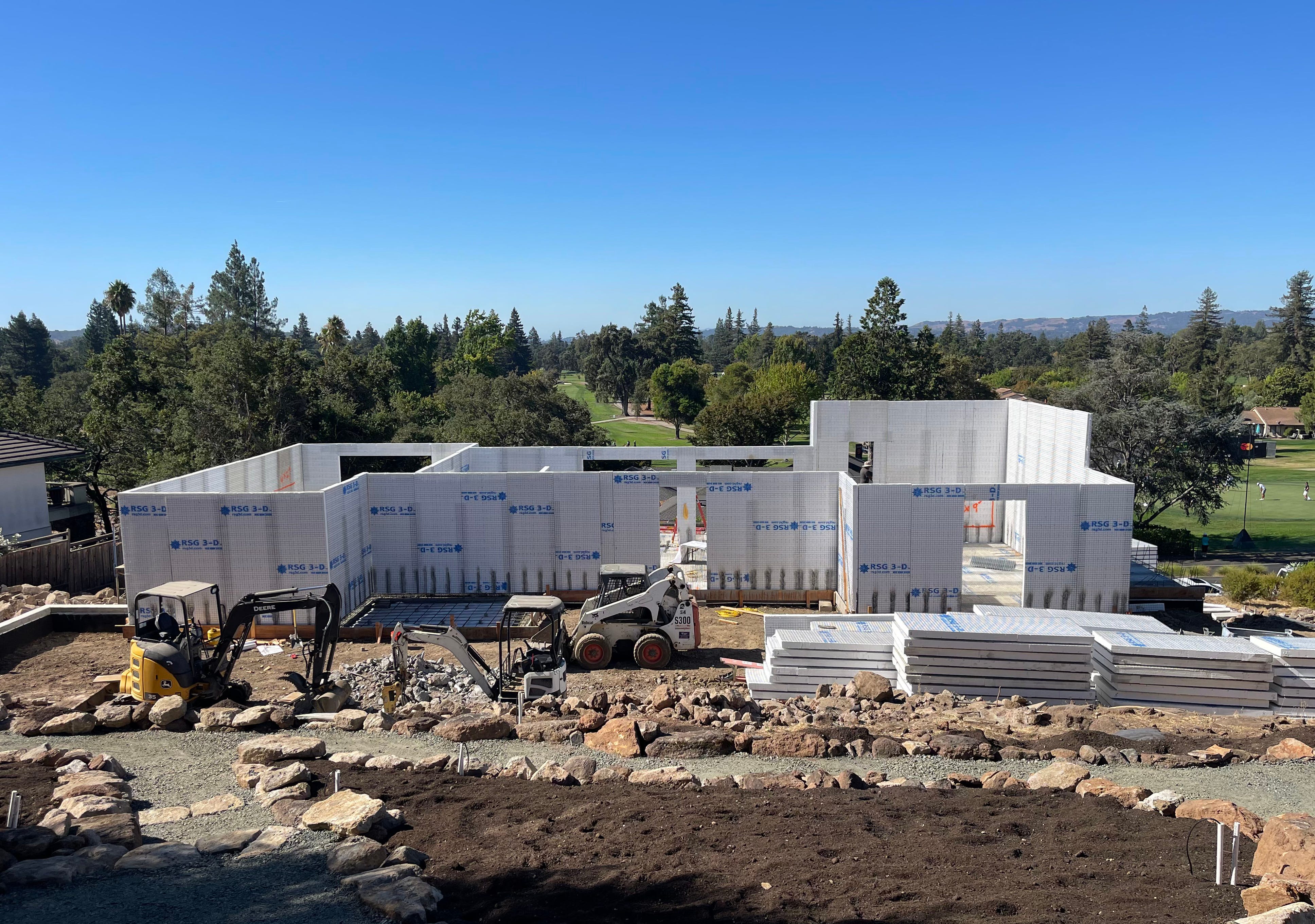
Enter RSG 3-D, a California-based firm that makes structural concrete insulated panel building systems designed to improve resistance to fire, severe weather, and seismic activity. The company bills itself as a next-generation construction company developing resilient building systems for an era defined by climate risk, rising insurance pressure, and growing demand for durable, disaster-resistant housing.
In a recent email exchange, RSG 3-D CEO Ken Calligar told me that the conversation about how buildings in high-risk environments are designed is one few people can afford to ignore anymore.
“Resilient construction has become a financial issue as much as an environmental one,” Calligar said, adding that insurance companies are reinforcing this shift by making it more expensive to remain exposed. He said the current context means it’s only natural that “people who experience natural disasters are increasingly motivated to change how they build and rebuild.”
By using a concrete and steel panel system like that designed by RSG 3-D, Calligar says clients can significantly extend the lifecycle of their buildings, while also reducing their energy, maintenance, and insurance costs by up to fifty percent.
“Ultimately, the building envelope is the single most important investment in any structure,” Calligar said. “Get it right, and everything else works better. Get it wrong, and the costs compound in every direction.”
In today’s newsletter, we’re building with Blox that include:
Anticipating the costs of climate-related disasters
Investing in long-term resilience and sustainability
Imagining a “future-proof” built world
Playing the Long Game
Calligar said that although interest in resilient construction has seen an uptick in recent years as natural disasters become more frequent, real adoption of new practices has been gradual—at times, frustratingly so.
“The first broad discussions of resilience within the building and development community emerged after Hurricane Katrina in 2005,” he said. He added that by the time Superstorm Sandy struck in 2012, early advocates for significantly higher resilience standards in the United States were just beginning to gain traction.
Calligar suggested that the U.S. construction sector has been slow to move away from established building methods due to a variety of factors. “Fear of change, concerns about cost increases, reliance on outdated codes, and general complacency have all slowed progress.”
And in a world rife with uncertainty—both economic and environmental—investing in resilient building systems still seems like an out-of-reach luxury to many. “Resilience is still too often viewed as aspirational rather than essential,” Calligar said, while noting that, contrary to popular belief, the upfront cost of building with RSG 3-D is on par with conventional U.S. construction methods.
However, recent events—particularly the increasingly regular wildfires in RSG 3-D’s home state of California—mean the case for a new approach to building standards is, perhaps unfortunately, becoming much more compelling.
Calligar pointed out that most clients he encounters now are underinsured, while contending with widening funding gaps and rising materials and construction costs. In some cases, he said, this leads people to choose cheaper materials, which ends up increasing long-term risk, along with future insurance and operating expenses due to growing climate instability.
“Today in California, three fundamental questions dominate: how much, how fast, and can I get insurance. These are economic questions, but they are increasingly shaped by climate risk and exposure to natural disasters,” Calligar said.
Yet in spite of rising economic pressure, he said that most consumers also now have a clearer understanding of their exposure to environmental risks and are actively seeking solutions.
“Decision-making is becoming more integrated,” he said. “Rather than treating resilience and sustainability as secondary considerations, buyers are evaluating them as core components of financial performance, with risk exposure and long-term cost stability driving project choices.”
Building a Resilient Reputation
After years spent working in investment banking and capital markets, Calligar acquired RSG 3-D’s predecessor operations from Mexico-based Insteel Panelmex and re-launched them under the new name in 2018. Despite not having a background in construction, Calligar’s previous experience in finance and a history of involvement in infrastructure operations meant he knew there were gaps in how the industry dealt with climate concerns.
“The United States still lacks a clear, consistent approach to building resilience,” he said. “Developers, builders, and even many architects remain rooted in legacy practices and materials that have already proven insufficient.”
Under Calligar’s leadership, RSG 3-D expanded its focus in the United States, particularly in regions dealing with wildfire exposure and rising insurance costs. The timing coincided with growing attention on how buildings perform during disasters, especially in areas where repeated fires or storms were beginning to affect rebuilding costs and insurability.
Calligar pointed to California’s 2015 Valley Fire as an early turning point in the company’s history. During that disaster, a home built with the RSG 3-D system survived the fire while surrounding structures were destroyed. Images showing the unharmed building surrounded by charred trees were widely circulated and helped spur conversations about fire-resistant construction.
“Clients became early adopters who learned directly from the Valley Fire outcome,” he said, describing how rebuilding efforts in Northern California introduced more homeowners to resilient construction systems after the fire.
In contrast, Calligar said a more recent project in Southern California signals a shift to planning for future disasters even before they strike. “Rather than rebuilding after disaster, this was a pre-build approach, proactively designing to protect the family and their assets,” he said. “It reflects a fundamental shift in mindset: anticipating risk based on recent events and preparing for a safer, more stable future.”
He said RSG 3-D is now engaged in the large-scale rebuilding of homes in the Los Angeles region. As the magnitude of losses has increased, the company says it has expanded its engineering, architectural, construction, and design-build capabilities to meet demand.
Calligar believes that trend is likely to continue. “The future will be defined by resilience for two reasons,” he said. “First, the cost of not being resilient has become too high to ignore. Second, the path to resilience is increasingly straightforward.”
The Proof Is in the Panels
RSG 3-D projects range from luxury leisure resorts to LEED-certified industrial buildings, universities, schools, custom homes, and multifamily residences across a wide variety of climates and geographies around the world.
“Every building, in every location, can benefit from our system,” Calligar said. “That represents a vast opportunity across commercial, industrial, infrastructure, multifamily, and single-family residential markets.”
Some notable examples of the system at work include the La Residencia multifamily complex in San Jose del Cabo, Mexico, which has survived numerous severe storms without any damage, and the Sweeney Granite Mountains Desert Research Center, which has been struck by two earthquakes measuring 6.9 and 6.5 Richter, with zero damage in either incident, despite designs including 24-foot walls and expansive glass.
RSG 3-D says its buildings are also remarkably energy efficient due to the system’s “monolithic” envelope that maximizes energy efficiency by providing zero air exchanges, minimal thermal bridging, and optimal thermal massing of interior walls.
“With energy, maintenance, and insurance costs reduced by up to half,” Calligar said, “and a lifecycle extended significantly, these buildings are stronger long-term investments by almost any measure.”
Another selling point of the RSG 3-D system is its suitability to unconventional design elements such as curves, domes, and cantilevers, which makes it appealing to architects who want to incorporate resilient building practices into an already-established aesthetic identity.
Calligar also described a growing interest in neighborhood-scale approaches to fire resistance, rather than focusing solely on individual homes. “In the case of urban fire events,” he said, “one resilient home is beneficial, a cluster is better, and a majority of resilient homes can form the foundation of a truly future-proof community.”
 | A guest post by
|