
The Bloxspring Essential Eight: Charu Ghandi
From rigorous architecture to experience-led luxury, the founder of Elicyon charts a career built on global culture, deep human connection, and an unwavering commitment to craftsmanship.

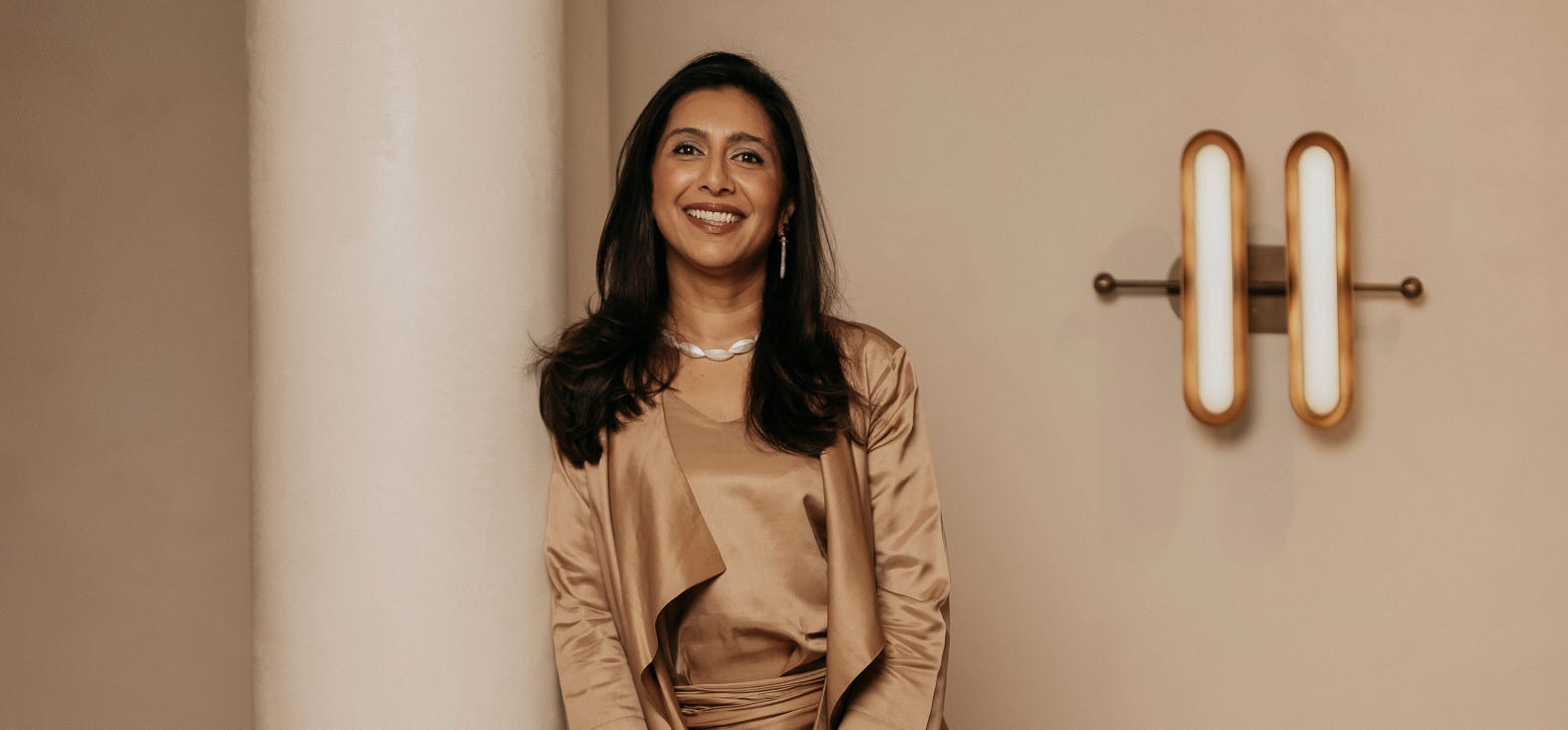
When Charu Gandhi launched Elicyon in 2014, she set out to bridge a traditional industry divide: unifying the uncompromising rigor of an elite architectural career with a profound, artistic reverence for craftsmanship.
A RIBA and ARB qualified architect, Charu’s trajectory has been defined by an early, enduring fascination with how physical environments dictate the way we live, feel, and interact.
After completing her architectural studies in London, she joined the London office of Allies & Morrison in 2006, later returning to teach at her prestigious alma mater, the Architectural Association.
A pivotal move to the Candy & Candy group in 2011 allowed her to call upon her vibrant global upbringing, managing international commissions that expanded her creative footprint across South Asia, Africa, and the UK.
Today, Elicyon’s extraordinary portfolio traverses luxury residential, commercial, and hospitality spaces, all underpinned by historical mindfulness. Yet, for Charu, the real evolution of her career lies in the human element.
Moving past pure aesthetics, she champions design as a tool for connection and wellbeing, pushing back against real estate’s tendency to prioritize strict financial metrics over the actual end-user experience.
In this week’s edition of the Bloxspring Essential Eight, Charu talks with us about the industry’s massive pivot toward experience-led design, where modern homes are fast becoming destination environments complete with hospitality-inspired wellness and entertainment hubs.
She also delivers a dose of practical reality, outlining the operational hurdles of navigating complex planning and the Building Safety Regulator (BSR) framework.
Read on for an essential masterclass in why the future of the built world belongs to spaces that are authentic, highly collaborative, and in her words, “deeply human.”
How did you initially get involved with the real estate industry?
My route into the industry was through architecture. From an early age, I was fascinated by how spaces can influence the way we live, feel and interact. After studying architecture in London, I worked on a range of residential and commercial projects before founding Elicyon.
What interested me most wasn’t simply the building itself, but the experience of inhabiting it.
That curiosity about the relationship between people and place ultimately led me into luxury residential, before expanding into commercial and hospitality projects as well.
What’s the most unexpected aspect of how your career has evolved?
Probably how much of my role today revolves around people. When I founded Elicyon, I imagined spending most of my time designing spaces. In reality, building a design studio requires leadership, communication, and collaboration at every level.
The creative side remains central, but I’ve learned that the strongest projects are born from great relationships, whether that’s with clients, craftspeople, or, most importantly, within our own team.
What advice would you give to someone entering the industry today?
Stay curious and look beyond your own discipline.
Some of my greatest sources of inspiration have come from travel, art, fashion, culture, and craftsmanship.
The built environment touches every aspect of our lives, so understanding people is just as important as understanding buildings.
I would also encourage young professionals to value craftsmanship and quality. Trends come and go, but thoughtful design and attention to detail will always endure.
What has surprised you most about how the built world and the real estate industry have changed since your career began?
The shift towards experience-led design. Today, people expect much more from the spaces they inhabit. They are looking for homes and environments that support wellbeing, reflect their values and enhance their daily lives. There is a growing appreciation that design is not simply about aesthetics; it has a profound impact on how people feel.
We’ve also seen a renewed emphasis on entertaining and connection within the home.
Increasingly, our clients want spaces that bring people together, whether that’s a beautifully designed kitchen, a flexible dining space, a bar, a wine room, or an outdoor entertaining area.
The home has become a destination for gathering, hosting, and creating meaningful experiences with family and friends.
I think that’s one of the most positive changes we’ve seen as an industry. People are placing greater value on how a space supports the way they want to live, rather than simply how it looks.
What’s your favorite aspect of working in the real estate industry?
I love that the spaces we design become part of people’s personal stories. They are where families gather, milestones are celebrated, and memories are made. Being entrusted with shaping those experiences is both a privilege and a responsibility.
What’s your least favorite aspect of working in the real estate industry?
The tendency for projects to sometimes become overly focused on financial metrics at the expense of the people who will ultimately use the space. Commercial success is, of course, essential, but I believe the most successful projects are those that balance financial objectives with a genuine understanding of the human experience.
The places we create have a lasting impact on people’s lives, so it’s important that we approach them with care, thoughtfulness, and a long-term perspective. When design, wellbeing, and functionality are considered from the outset, the results are always stronger for everyone involved.
What do you think is the biggest challenge facing the industry today?
One of the biggest challenges facing the industry [in the UK] today is navigating the increasingly complex planning and Building Safety Regulator (BSR) processes.
The intent behind these regulations is absolutely important, but the reality is that approval timelines can often be lengthy and unpredictable, creating challenges for clients, developers, and project teams alike. In some cases, projects can lose momentum or face significant delays before work has even begun.
I think there is an opportunity to make these processes more streamlined and efficient, while still maintaining the high standards that are essential for the industry. Greater clarity and agility would help unlock investment, encourage innovation, and ultimately allow more great projects to come to life.
What makes you optimistic about the future of the built world?
What excites me most is that, despite living in an increasingly digital world, people are placing greater value on experiences, craftsmanship, and human connection.
We’re seeing a fascinating crossover between hospitality and residential design.
Clients want their homes to offer the same sense of occasion, comfort, and thoughtful service that they experience in the world’s best hotels, whether that’s through spaces designed for entertaining, wellness, or simply spending quality time together.
At the same time, there is a renewed appreciation for craftsmanship, artisanal techniques, and the stories behind the objects and materials that surround us. While technology will continue to transform how we design and build, I believe the future will belong to places that feel authentic, personal, and deeply human.