
The Bloxspring Essential Eight: Peter Cole
Pivoting From the World of Luxury Hotels to Buzzy Members Clubs

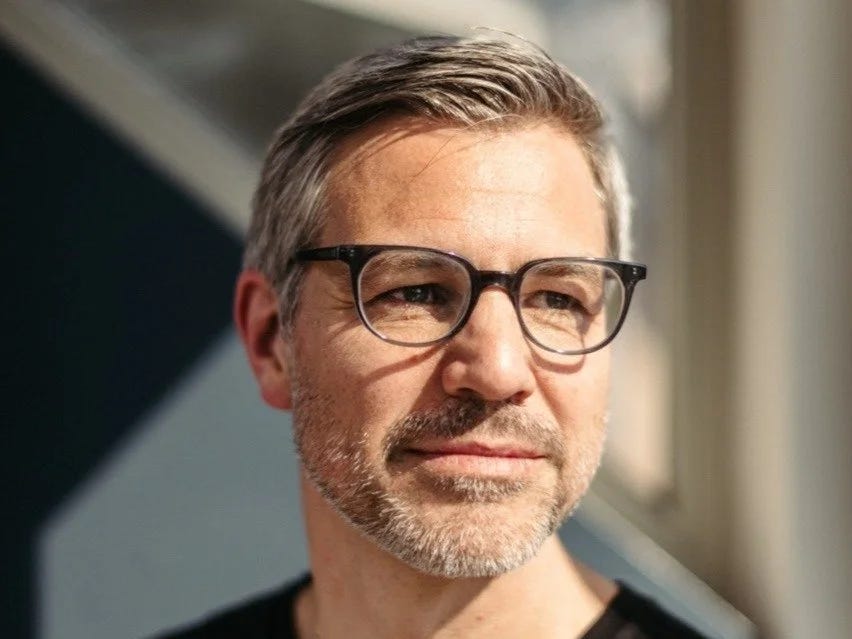
There is a whiteboard on Peter Cole’s desk. A gift, he tells me, from his wife. On it are the things he should be focusing on such as capital raising or strategic priorities. It’s a gentle reminder for the moments when the day collapses into minutiae and he needs reminding of why he is doing any of this. It’s a long way from his time as CFO at Ritz Carlton, or the three and a half years he spent integrating Starwood into Marriott, one of the largest mergers in hospitality history. But Cole left that world because of where it was headed.
His view, stated plainly, is that high-end hospitality started confusing price with quality and never quite recovered. What made luxury what it was—the sense that someone is always thinking about elevating your experience—slowly got phased out. And what remained was expensive, but no longer luxurious.
Cole left to build something different. Today he is CEO of Collectio Group, which operates private member clubs and is organised around the idea that what people are really looking for — in hospitality, and increasingly in much else besides — is somewhere to belong.
I sat down with Peter to unpack his career and insider views on the world of hospitality and beyond.
How did you initially get involved with the real estate industry?
My undergraduate training is in real estate finance. After graduating I worked as a commercial appraiser — valuations, a lot of analytical groundwork, and then decided I wanted to move into general management so went back for an MBA. Marriott recruited me out of graduate school because they wanted people who could think like real estate, so I joined their development finance organisation.
From there I took off into hospitality proper. Operational roles running hotels, then worked up to CFO at Ritz Carlton, then back into the broader Marriott world and then the Starwood integration — merging two enormous companies over about three and a half years. After that I became CEO of Design Hotels. Still within the Marriott umbrella, but a completely different world. Different ethos, different ownership community, different everything.
What's the most unexpected aspect of how your career has evolved?
Staying at one company for 25 years, for a start. That was never the plan. The only reason it happened is that every so often a completely different role—some I’d worked toward, some arrived sideways. Development finance to corporate treasury to running hotels to international luxury brand to merging companies to Design Hotels.
The other thing is how much my relationship with the industry itself changed. I came in on the finance side. You either built cheaper or financed better. Those were the tools. Now our whole company is grounded in the idea that what makes something powerful is that it’s unique, and that it stands for something specific. That shift is probably the most significant thing that happened to me professionally.
I'd also say I've learned something specific about my own role. I'm not a creative. I wouldn't describe myself that way. What I can do is get creatives to move—work with them in a way that gets things pushed forward and brought to completion. At Design Hotels, we had an initiative where we'd bring creative people together, enable them to make something, and use that content to speak to other industry participants. The challenge is always the same moment: things are perpetually improving but never quite finished. Someone wants to shoot it one more time or rework the narrative. Someone has to guide the process to completion. It's not about saying perfect is the enemy of good. It's about moving to the next stage.
What advice would you give to someone entering the industry today?
I often speak with students and here’s what I tell them: look at me. I have a real estate finance degree and I run a company that operates private member clubs. You cannot draw a straight line between those two points. There is just no point.
The other thing I say is: just try it. And when you recognize you’ve stopped learning—when you’re getting better at what you already know rather than building something genuinely new—move faster than feels comfortable. If you’re asking whether now is the right time, you’ve already waited too long.
The built world is so much more than most people imagine when they’re starting out. There is so much more power in doing something counterpositioned, something genuinely unique, something that stands for something, than in squeezing another point off your financing costs. That takes time to understand. But it’s there to be found.
What has surprised you most about how the built world and the real estate industry have changed since your career began?
When I started out, real estate was very slow to adopt anything. The model was build cheaper or finance better — and going hard on both levers is also why so many owners went into bankruptcy when markets turned. You had nothing to fall back on if conditions shifted.
Technology changed that substantially, and it has been a welcome addition. How things get created, how operators attract and retain users — coworking and the entirely digital face it relies on would have been unthinkable in this industry not long ago. There are now many more ways to build something defensible. That is almost entirely down to what technology opened up.
What keeps you motivated?
Finding something new to build skills around. The membership world is relatively new territory for me. I have only been in it five or seven years, and there is still a great deal to learn, people with more experience to surround myself with, and goals to pursue together. The moment I stop feeling that genuine newness is the moment I know it is time to move. That has been true at every stage of my career.
There is also something I had not anticipated about entrepreneurship after a long career inside a large institution. At Marriott there were always resources—teams, infrastructure, and budget. Now there are moments where I look up from my desk and realize I am the one writing the contract. Building from scratch has a satisfaction to it that I did not fully appreciate until I was doing it.
What’s your least favorite aspect of working in the real estate industry?
The gap between what you want to do and what you currently have the resources to do. That is the honest answer. It closes over time. It is just not closed yet.
What do you think is the biggest challenge facing the industry today?
People. It has always been a people business, and staffing is the largest cost in any hotel. But the problem is not just headcount. It’s the attitude. So much of hospitality has gotten trapped in a mode of simply getting the job done because there isn’t enough staff, and that is how you end up asking guests at check-in whether they want housekeeping during their stay. That is a deeply limiting way to begin someone’s experience. It signals, before they have reached their room, that something has already been taken away.
What has been lost is the willingness to hire for taste and craft and the understanding that small touches are the product. That was always the core of real luxury, way before luxury became a price bracket.
The check-in and check-out problem is a related symptom. Those rigid times exist because of how rooms are turned—cleaning schedules, HR practices, all of it is built around a specific window. Changing it inside a major brand means navigating the entire loyalty program architecture. But at some point someone will break it, make their name for it, and the rest will follow almost immediately. Changes take a long time in hospitality. But when one moves, they all do.
What makes you optimistic about the future of the built world?
The consumer is shifting toward something hospitality is well-placed to serve. People are not just looking for experiences—that word has been used to the point where it means almost nothing. They are looking for something they can become part of. People are searching for belonging, not just in travel but across their lives. The ability to find a community and commit to it with genuine passion—that is what is driving a lot of consumer behaviour right now.
It’s precisely why we have focused Collectio within the membership world. We think there are significant businesses to be built from that shift. We think ours is one of them.
This interview has been edited for concision and clarity.